
Fascia & the Vagus Nerve—two hidden systems that shape how we feel, move, and respond to life. They are the body’s silent language of calm, tension, and release. When fascia tightens, or when the vagus nerve loses tone, our entire being shifts toward stress. When they harmonize, we return to balance, presence, and flow.
Stress isn’t just a mental story. It’s encoded in your fascia, the rhythm of your breath, and the tone of your nervous system. In this article, we’ll explore how the fascia and vagus nerve work together to regulate stress, restore ease, and guide you back to the body.

What is Fascia?
- The term fascia refers to the continuous web of connective tissue that surrounds every muscle, organ, nerve and bone. Cleveland Clinic+1
- It is not merely “packing material” — fascia is richly innervated, highly sensitive, and dynamic. One estimate suggests that the fascial network houses ~250 million free nerve endings — making it arguably the largest sensory organ in our body. The Fascia Guide+1
- From a functional perspective, fascia plays roles in support, force transmission, inter‑organ communication, and subtle sensory signalling. Cleveland Clinic+1
- When fascia becomes restricted (from chronic tension, trauma, repetitive posture, or emotional stress) its mobility reduces — this can lead to physical stiffness, pain, and in some cases, persistent nervous system activation. BLACKROLL+1
Key Takeaway
Treat fascia as a living sensory web. When it’s free, your body flows; when it’s bound, your nervous system may remain locked in a state of alert.
What is the Vagus Nerve?
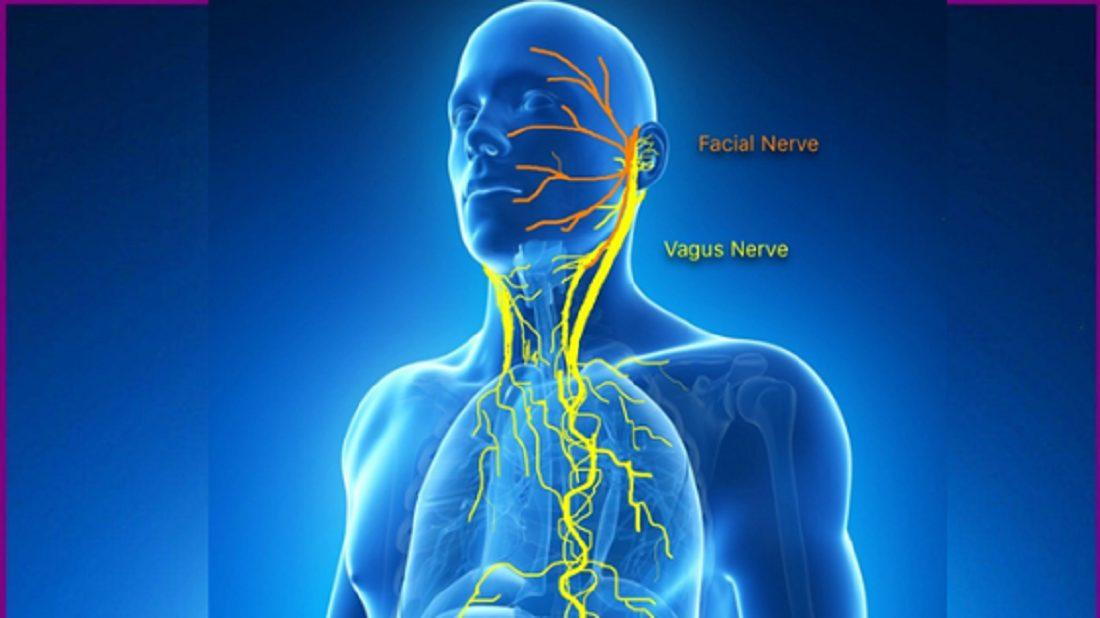
- The Vagus Nerve (cranial nerve X) is the longest cranial nerve, running from the brainstem down into the neck, chest and abdomen, innervating many organs. NCBI+1
- It carries afferent (sensory) signals from the body to the brain (about 80–90 % of its fibres) and efferent (motor/parasympathetic) signals from brain to body. PMC
- Functionally, the vagus nerve is a key player in the parasympathetic nervous system: the branch of our nervous system associated with rest, digest, repair, and social connection. PMC+1
- The Vagus Nerve (cranial nerve X) is the longest cranial nerve, running from the brainstem down into the neck, chest and abdomen, innervating many organs. NCBI+1
Key Takeaway
When your vagus nerve is freely signalling, you feel safe, you’re out of fight‑or‑flight, your body can rest, heal and integrate.
How Fascia & the Vagus Nerve Connect
Here’s where the deep healing alchemy begins: fascia and the vagus nerve are not separate. They are linked in a dynamic conversation.
- Anatomical & sensory link
- The fascia houses extensive networks of sensory receptors (nociceptors, mechanoreceptors, interoceptors) which gather information about stretch, tension, compression, movement, and internal body states. Nature+1
- The vagus nerve runs through and alongside fascial sheaths in the neck and torso (for example, within the carotid sheath alongside deep cervical fascia) indicating a structural connection. NCBI
- In short: when the fascia tightens or gets stuck, it can impede the ease of signalling through the vagal network; conversely, when the vagus is dampened, fascia may stay in tension. Arielle Schwartz, PhD+1
- The fascia houses extensive networks of sensory receptors (nociceptors, mechanoreceptors, interoceptors) which gather information about stretch, tension, compression, movement, and internal body states. Nature+1
- Functional / regulatory link
- Research suggests the vagus nerve may act as a conduit between the fascia (body’s sensory web) and the central nervous system, helping modulate autonomic balance (sympathetic vs parasympathetic) via the fascia. PMC+1
- Example: when fascia is restricted, it may send signals of threat (via nociception, tension, reduced fluid mobility), which in turn can suppress vagal tone (the capacity of the vagus to regulate the nervous system). MFR Therapists+1
- Research suggests the vagus nerve may act as a conduit between the fascia (body’s sensory web) and the central nervous system, helping modulate autonomic balance (sympathetic vs parasympathetic) via the fascia. PMC+1
- The reverse also applies: by promoting fascia hydration, mobility, gentle movement, and releasing restriction, we can help enhance vagal tone, meaning we improve the nervous system’s ability to rest, digest, and integrate. BLACKROLL+1
- The reverse also applies: by promoting fascia hydration, mobility, gentle movement, and releasing restriction, we can help enhance vagal tone, meaning we improve the nervous system’s ability to rest, digest, and integrate. BLACKROLL+1
Key Takeaway
When you release fascia, you’re not just “stretching muscles”. You’re unlocking a sensory‑network that supports vagal regulation and thus true nervous‑system calm.

Why This Matters for Stress, Calm & Healing
- Chronic stress isn’t just mental fatigue. It lives in posture, in tissue tension, in restricted breath, in a nervous system that can’t down‑regulate.
- Because fascia and the vagus nerve play complementary roles, addressing one without the other often leaves residual tension. • For example: you might meditate, but the jaw stays locked; or you breathe deeply, but the spine remains braced.
- By integrating fascia‑release + vagal‑support you are creating a pathway for stored emotional, somatic stress to unwind: tissue becomes more open, the nervous system more regulated, and your felt sense of safety increases.
- Studies show that interventions improving vagal tone (via breath, bodywork, movement) reduce markers of stress, improve HRV (heart rate variability), and reduce inflammatory responses. MDPI+1
- Fascia research shows that manual/movement interventions which restore fascial mobility also positively influence autonomic regulation, interoception (felt sense), and emotional resilience. YogaUOnline+1
Key Takeaway
Healing begins in the body, in the fascial web, in the nervous system. And when both align, you move from mere relaxation to deep integration.
Your Follow‑Along Stress Reset Session
If you’re ready to move this into embodied experience: check out my guided session “Stress Reset | Fascia Release for Nervous System Balance” on YouTube. In this session you’ll be led through three specific techniques that speak directly to these systems.
- Palate Swipe → Calms the nervous system, stimulates the vagus nerve, releases tension in the jaw + face.
- Totally Twisted → Unwinds fascia spirals, relieves spinal pressure, restores flow throughout the body.
- Anti Gravity → Decompresses the back, resets posture, helps you feel light, grounded, open again.
These practices aren’t just “nice stretches”. They’re intentional gestures into your fascia and nervous system, helping you release stored emotion, recalibrate your physiology, and reconnect with your natural energy.
Final Thoughts
In the architecture of our being, fascia and the vagus nerve are two pillars of the inner world, one the sensory web that records tension and movement; the other the nervous bridge that regulates our state of safety. When we engage both with mindfulness, movement and presence, we open the door not just to relaxation but to transformation.


