
Fascia
Fascia is your body’s connective tissue network—an intelligent system that influences movement, posture, breathing, recovery, and how your nervous system responds to stress.
Fascia isn’t a single “thing” you can point to. It’s a continuous web of connective tissue that wraps and supports muscles, organs, nerves, blood vessels, and bones—helping the whole body work as an integrated unit. When fascia is adaptable, movement feels coordinated and breath feels more available. When fascia becomes protective, the body often feels braced, tight, or stuck.
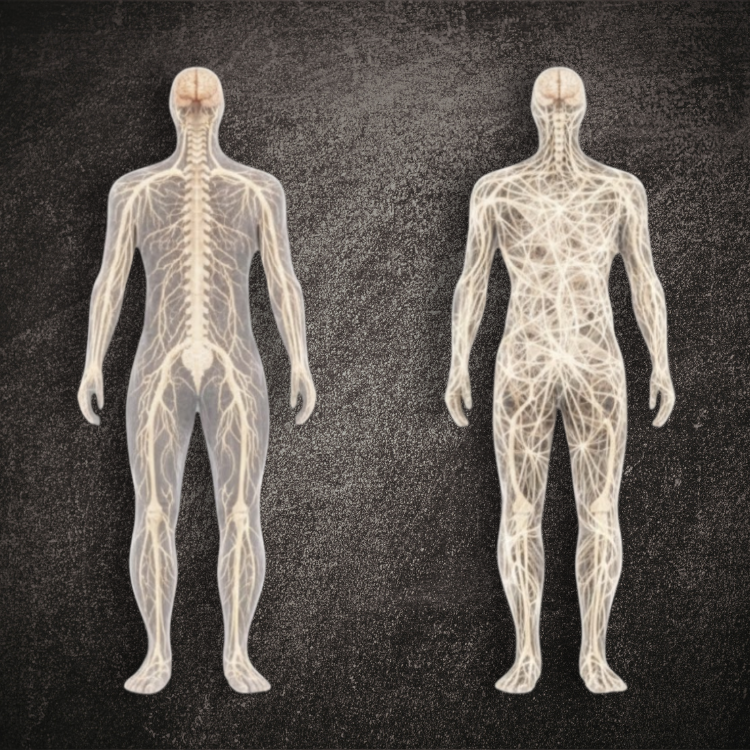
At Mindful Movemend, we view fascia through a nervous-system-led lens: state shapes structure. When your system is under pressure, fascia often stiffens for stability. When your system receives safety, fascia can reorganize.
Whether you’re a CEO under sustained demand, a parent carrying the emotional weight of a household, a founder building through uncertainty, or someone recovering from long-standing stress—fascia often tells the truth before the mind can explain it.
Calm the body. Clarity follows.
What is fascia?
Fascia is the connective tissue matrix that:

Connects everything
Supports posture and alignment
Carries sensory input
Helps transmit force
If you’ve ever wondered why one “tight” area seems linked to other symptoms
Breath restriction, neck or jaw tension, hip stiffness, low-back guarding—fascia is often part of that story because it’s continuous.

Where the term “fascia” originated
The word fascia comes from Latin, meaning band or bundle. In anatomy, it describes layers of connective tissue that wrap, separate, and organize structures throughout the body.
In modern movement and bodywork conversations, “fascia” also points to a broader idea: the body’s internal communication and support system. It’s not just packaging—it’s living tissue that adapts to how you move, how you breathe, and how safe your system feels.
Fascia and the nervous system
Your nervous system is constantly asking one question: Am I safe?
Your fascia often reflects the answer.
When the nervous system perceives threat (high workload, chronic urgency, unresolved stress, injury, emotional pressure), the body tends to increase protective tone:
- Shallower breathing
- Bracing through the abdomen, ribs, neck, jaw, and hips
- Reduced mobility
- Heightened sensitivity or numbness
- Incomplete recovery and restless sleep

When the nervous system receives consistent signals of safety—steady breath, slow pacing, precise gentle input, and regulation practices—the body can shift out of protection. That often looks like:
- Breath opening
- Tension reducing without “forcing it”
- Improved coordination and stability
- More emotional steadiness and clearer decisions under pressure
This is why we lead with regulation as strategy—not intensity as a solution.
We help people regulate their nervous system so they can lead their lives—and others—from clarity instead of survival. In the body, that often looks like less bracing, more stable breath, and movement that doesn’t require constant effort.
Can fascia hold “stress” or “memory”?
People often say “fascia stores trauma.” The more accurate framing is this:
Fascia is part of the body’s patterning system. Experiences shape how you breathe, how you brace, how you move, and how you protect. If those protective responses don’t fully resolve, the body can repeat them—until they feel normal.
That’s what “memory” can mean in the body:
- Learned Posture
- Learned Guarding
- Learned breathing patterns
- Learned readiness
The goal isn’t dramatic release. The goal is updated signals—new evidence of safety that allows the nervous system (and your fascia) to stop doing what it had to do.

Can fascia hold “stress” or “memory”?
People often say “fascia stores trauma.” The more accurate framing is this:
Fascia is part of the body’s patterning system. Experiences shape how you breathe, how you brace, how you move, and how you protect. If those protective responses don’t fully resolve, the body can repeat them—until they feel normal.
That’s what “memory” can mean in the body:
- Learned Posture
- Learned Guarding
- Learned breathing patterns
- Learned readiness

The goal isn’t dramatic release. The goal is updated signals—new evidence of safety that allows the nervous system (and your fascia) to stop doing what it had to do.
Common fascia myths
Fascia is just a thin wrapper.
More true
You need to “break up” fascia with force.
More true
Tightness means you’re broken.
More true
Release should be intense or emotional.
More true
Why we use breath and gentle precision

Breath is one of the most direct ways to influence nervous system state. When breath leads, movement becomes information—and the body can reorganize without fighting itself.
In Mindful Movemend, we prioritize:
- safety before mobility
- precision over intensity
- consistency over extremes
- breath-led, regulation-based movement
- progressive capacity (not performance pressure)
This approach isn’t about “doing more.” It’s about helping your system do less protection—so you can move, lead, and recover with more ease.
If you want to explore this further, we teach fascia and nervous system regulation through self-paced education and guided practice—so you can build a baseline you can rely on.
Calm the body. Clarity follows.
Ready to practice regulation and move from clarity, not survival? Join the community for all self-paced courses, weekly calls, and live masterclasses.
Got Questions?
What does fascia do in the body?
Fascia connects and supports muscles, organs, nerves, and bones. It helps with posture, movement coordination, force transfer, and sensory feedback to the nervous system.
Why does fascia get tight?
Fascia can feel tight due to stress, overuse, injury, inflammation, dehydration, repetitive posture, or long-term nervous system activation (bracing). Tightness is often protective, not a flaw.
What is fascia release?
“Fascia release” refers to methods that help the body reduce protective tension and improve tissue glide and movement coordination—often through gentle pressure, breath-led movement, and nervous system regulation.
Is fascia related to anxiety or overwhelm?
Fascia itself isn’t “anxiety,” but it participates in the body’s stress response. When the nervous system is in a sustained high-alert state, the body can brace and feel restricted.
Can stretching fix fascia tightness?
Sometimes stretching helps temporarily, but if the nervous system still perceives threat, the body may return to protection. Regulation, breath, and precise input often create longer-lasting change.
This page is for educational purposes and is not medical advice. Mindful Movemend does not diagnose, treat, or cure medical or mental health conditions. If you have symptoms, pain, or medical concerns, consult a qualified healthcare professional.
